


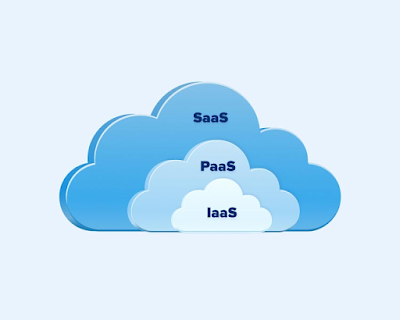
Cloud computing is no longer rocket science. It is here, and in many cases, it is already making organisations more agile to today’s challenges. Cloud-based services- IaaS, PaaS, and SaaS are all great tools to help an organisation become more efficient, but they also introduce new security issues that IT must be prepared for.
This article will discuss some of the security risks that come with using IaaS, PaaS, and SaaS services and an introduction to Cloud-based SIEM which is a key component for ensuring that your business is secure over the cloud.
What is IaaS, PaaS, and SaaS?
IaaS (Infrastructure as a Service) provides its customers with infrastructures such as remote or visualized storage, servers, processing units, entire virtual machines, and many other technological resources which is why it can also be known as Hardware as a Service (HaaS).
PaaS (Platform as a Service) is a cloud service that uses virtualization to offer an application-development platform to developers or organisations. PaaS is able to provide its customers with application development services such as database, computing, memory, etc.
SaaS (Software as a Service) is a cloud service that an organisation can subscribe to where they don’t have to manage or maintain any software themselves, such as email and office software.
While IaaS is the most basic type of cloud service providing users with access to virtualized computing resources, PaaS builds on top of IaaS by providing a platform for developing, deploying, and managing applications. SaaS would be the most advanced type of cloud service among the three. It is able to provide its users with software applications that are accessible from anywhere in the world. With SaaS, customers do not need to install or manage any hardware or software, a working internet connection and a browser would suffice.
What are the security issues in IaaS, PaaS, and SaaS?
One of the most common security issues with cloud services is that it can be difficult to monitor all activity and keep data safe. Therefore, each cloud service has its own set of security concerns. Let’s take a look at them:
Security issues in IaaS:
The most serious concern with IaaS is security. Since IaaS providers give their users full control over their resources, they are rarely able to offer absolute security.
- Data theft hosted on the cloud infrastructure via a breach on the provider’s end.
- Lack of visibility could lead to the inability to prevent attacks on resources being used.
- Users can create their own security policies, which may not be as robust as the provider’s.
- Users can also delete resources or change settings without warning, which could lead to data loss or system crashes.
IaaS providers must ensure that their systems are secure from attacks and have measures in place to protect against accidental or unauthorized changes by users.
Security issues in PaaS:

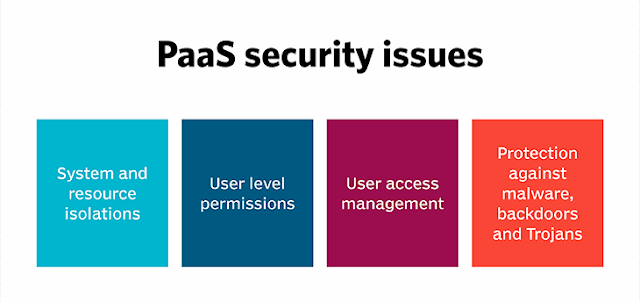
While working with a PaaS provider you must be aware of how their platform works and what actions you can take to secure your data.
- Because PaaS platforms provide access to a large number of applications and data, they are attractive targets for hackers.
- Attackers can exploit vulnerabilities in the platform or the applications running on it to gain control of systems or steal sensitive data.
- In addition, developers who write applications for PaaS platforms may be new to secure application development, which may result in the creation of applications that contain security vulnerabilities.
- Another thing to note is that the Increasing complexity of PaaS infrastructures results in more time/effort for detecting breaches and malicious activity.
To prevent data breaches and system outages caused by unauthorized changes or attacks, providers need to have a clear understanding of their customers’ cloud usage patterns so they can monitor activity and detect anomalies.
Security issues in Saas:
SaaS providers are generally aware that security is of the utmost importance, but you should always check your provider’s security policies to be sure.
One of the biggest security risks with SaaS is that since users access their resources over the internet, they could be exposing themselves to additional threats and vulnerabilities such as Man-in-the-Middle attacks and phishing scams if they aren’t careful.
- The end-user has no visibility whatsoever when it comes to viewing how their data is being stored and processed.
- A breach on the provider’s end may leave customers feeling helpless.
- In addition, SaaS applications are often used to store and process sensitive data all in one place. Attackers find this particularly appealing and may try to gain access to this data by exploiting any vulnerability that they can find.
- An inability to assess the security of the SaaS application could make it difficult for a company to maintain regulatory compliance.
To work smoothly with a SaaS provider, ask for their security policy and make sure they are at par with your company’s standards. Organizations that use SaaS security on their end by ensuring that their security solutions, such as firewalls and antivirus software are up-to-date and configured correctly to protect them against threats.
How do security responsibilities differ between Iaas, PaaS, and SaaS?
The responsibility for cloud security is not always clear. It can be difficult to determine who is responsible for what.
With IaaS, the provider is responsible for securing the resources they provide; however, you are responsible for securing applications and data running on those resources. You must ensure that all devices that access the cloud are secure and that your systems are patched and up to date. Pentesting cloud is designed to evaluate the strengths and weaknesses of a cloud system in order to enhance its overall security posture.
In a PaaS deployment, both the provider and the customer are responsible for securing the applications and data. The provider is in charge of securing their platform, but the customer is responsible for application security.
With SaaS, the provider is again solely responsible for platform security while the customer is only responsible for securing their data.
Cloud-based SIEM
There are many different SIEM (Security Information and Event Management) systems available, but not all of them can collect data from cloud services. If your company is utilising IaaS, PaaS, or SaaS platforms, you’ll need a good cloud-based SIEM solution.
A good cloud-based SIEM system will also include features to help you respond to threats quickly and effectively before they cause damage. This can help with this by collecting data from all of your cloud services in one place, allowing you to quickly see what’s happening across all your platforms.
In conclusion…
Cloud services can be a great way to reduce costs and increase efficiency, but it’s important to understand the security risks involved before making a move.
While cloud service providers need to be aware of the threats their customers face and take the necessary steps required to protect them, customers also need to be proactive about securing their data and should regularly monitor their cloud services if they want to stay ahead of the ever-evolving threats.
Businesses that use IaaS, PaaS, or SaaS cloud services could invest in a good SIEM solution to quickly identify and respond to security incidents.